
“It’s Just Walking”
"It’s just walking." Sound familiar?
Maybe you’ve said it yourself, waving off your morning walk like it barely counts.
Or maybe you were talking with a friend and she says something to the effect of, “Oh, that's just walking, it's not doing much.” Like it’s the consolation prize of exercise. Like the real work happens somewhere else.
It's time to stop underestimating the most powerful movement practice we have.
Walking is not “just” anything. It is one of the most accessible, adaptable, and profoundly healing movement practices available to us. And I think it’s time we gave it the credit it deserves.
Walking is Exercise.
Let’s address the myth head-on: walking is not a lesser form of movement. It is cardiovascular exercise that gets your heart pumping, your blood moving, and your whole body engaged. Done consistently, it builds endurance, supports heart health, strengthens your legs and core, and burns real energy.
And here’s what most people miss: walking can be as easy or as hard as you make it. The intensity is entirely in your hands.
Want to push yourself? Then try one of these walks:
• Hill walking: find inclines and own them. Your heart rate will tell you this isn’t a stroll. Then try walking back down the incline and up again a few times.
• Interval walking: alternate between a brisk power pace and a recovery walk. This mimics HIIT training and is incredibly effective.
• Adding movement: skipping, side steps, high knees, lunges. Weave them into your walk and it turns it into a full-body workout.
• Speed walking: arms pumping, core engaged, moving with purpose. This is cardio, full stop.
The level of challenge in your walk is entirely determined by your level of intention.
Walking is a Tool for the Whole Body and Mind
We are not just bodies that need to be moved. We are whole people. People who carry thoughts, worries, grief, ideas, and dreams. Walking is one of the few practices that tends to all of it at once.
Walking gives your mind room to breathe.
There is something that happens when your feet start moving and your eyes have something natural to look at. The mental noise quiets. Ideas that were stuck start to flow. Problems that felt impossible begin to untangle themselves, one step at a time.
How many times have you gone for a walk frustrated or overwhelmed, and come back with clarity you didn’t have before? That isn’t a coincidence. That is the walk working. Some of the best decisions I’ve ever made were walked into existence.
Walking is also one of the most powerful tools we have for processing difficult emotions. Grief, anxiety, anger, and uncertainty are all dealt with through movement. When words fail, your feet can carry you through.
Walking is Connection. And Women Need Connection.
There is a reason women have always walked together. Side by side, something opens up that doesn’t always open across a table. The movement loosens us. The shared rhythm creates safety. And suddenly we’re talking about things that matter in a way that feels easy and natural.
Walking alongside other women is not a small thing. It's a community. It’s accountability. It is being witnessed in your effort and your realness. It is having someone beside you who is also choosing to show up for herself, and that choice is something powerful.
Women who walk together tend to stay consistent longer. They hold each other accountable without judgment. They celebrate small wins and show up on the hard days. That’s the kind of support that changes lives.
The Real Shift: Walking as a Wellness Practice
Here is what I want you to consider. What if we stopped thinking of walking as the thing we do when we can’t do anything else and started treating it as a practice? A real, intentional, worthy practice.
A walk with intention is different from a walk without one. When you carry a theme: gratitude, awareness, strength, or release into your movement, the walk becomes something more. Your body is moving and your mind is working and your heart is present all at once. That is mindfulness in motion. That is whole-body wellness.
Add in your journal afterward. Maybe a grounding meditation before. Pair it with the company of women who are walking toward their own wholeness. Now you have a practice that touches every part of you. The physical, emotional, mental, and spiritual.
Walking is a full act of self-care. Walking is medicine. Walking is community. Walking as a daily commitment to yourself that compounds over time into something you can feel in your body, your mindset, and your life.
So the next time someone says “it’s just walking”
You can smile. Because you know that:
Walking is cardiovascular health.
It’s mental clarity.
It’s emotional processing.
It’s community building.
It’s strength and endurance
And it’s intention and healing all wrapped up in the simplest act your body already knows how to do.
It is not “just” walking.
It is everything just one step at a time.
Walking While Away: How to Keep Moving on Vacation
You've been looking forward to this trip for months. The bags are packed, the itinerary is planned, and you're ready for a well-deserved break from the routine. But there's that little voice in the back of your mind asking: What about my walking routine? What about my wellness goals?
Here's the beautiful truth: your vacation doesn't have to mean vacation from yourself.
In fact, some of the most memorable, rejuvenating walks I’ve ever taken have been when I’m out of town. And no, I'm not talking about squeezing in punishing workouts between sightseeing tours. I'm talking about weaving movement into your travel in a way that actually enhances your trip.
Your Vacation and Your Wellness Can Coexist
There's this unspoken belief that when we travel, we have to choose: either we're "all in" on vacation mode, which apparently means abandoning every healthy habit we've built or we're so rigid with our routines that we miss out on the joy and spontaneity of travel.
But what if there's a third option? What if staying committed to your wellness journey while traveling doesn't mean missing out but instead it means experiencing your destination in a richer, more connected way?
Because here's what I've discovered: walking while out of town isn't just about hitting your step count. It's about seeing a place the way locals see it, finding moments of quiet in the midst of adventure, and staying connected to yourself even when everything around you is new.
Why Walk When You're Away?
See Your Destination from a Whole New Perspective. When you explore a new place on foot, you notice things you'd never see from a car or tour bus. The small bakery tucked down a side street. The walking path through the local park. Or in my case recently, the Boba Tea shop in San Francisco's China Town. We would have never found such a delicious respite without exploring the local area. The connection to daily life and the unexpected moments of joy that don't make it into guidebooks. You're not just visiting a place but you're experiencing it.
Hit Your Goals AND Discover Hidden Gems. Yes, you can absolutely meet your daily step goals while on vacation. But the real win? Your "workout" doubles as exploration. Those trails around your vacation rental? They might lead to the best viewpoint in town. That evening stroll along the waterfront? It becomes the most peaceful part of your day and a workout, all in one. You're not sacrificing sightseeing for exercise but instead you're combining them. You're being efficient in the best possible way: taking care of your body while feeding your soul.
Find Your Reset Button. Family vacations are wonderful. Group trips are fun. But let's be honest: constant togetherness can also be a lot. A morning or evening walk gives you something precious: space and alone time. Walking gives you space to clear your head. Space to process all the new experiences. Space to just be with yourself for a bit before diving back into the group dynamic. It's not selfish, it's self-care. And when you return from that walk, you're more present, more patient, more able to enjoy the people you're with. Everyone wins.
Stay Accountable to Yourself. Here's something powerful: when you keep your commitment to yourself even when circumstances change, you reinforce that you're worth showing up for. Traveling doesn't erase your wellness goals. It doesn't press pause on your progress. When you find ways to move your body, even on vacation, you're sending yourself a message: I matter. My health matters. My promises to myself matter, not just at home, but everywhere. That's not rigidity. That's self-respect. And it makes coming home so much easier. You're not starting over. You're continuing. There's no guilt, no feeling of having "fallen off the wagon." Just a smooth continuation of the journey you're on.
How to Make It Happen
Scout Out Your Options Before You Go- A little advance research goes a long way:
If you're staying at a hotel:
Check if there's a gym or fitness center
Map out safe, interesting walking trails and routes in the neighborhood
Note any parks, waterfronts, or pedestrian-friendly areas
If you're renting a house or condo:
Research local trails and nature walks
Look for scenic neighborhoods worth exploring
Check out any state or local parks within walking distance
Pro tip: Apps like AllTrails, MapMyWalk, or even Google Maps can show you walking routes and trails wherever you are.
Use What's Available
Hotel gym: Great! A 20-30 minute treadmill walk while catching up on a show can be perfect when the weather's bad or you just want air conditioning.
Beachfront property: Nothing beats a sunrise or sunset walk on the beach. Bonus: walking on sand is extra challenging for your legs.
Mountain rental: Those trails are calling your name. Even a short nature walk can be incredibly rejuvenating.
City hotel: The sidewalks are your gym. Especially in a place with great hills. Pick a direction and explore. You can always use your phone to navigate back.
Keep It Simple and Joyful
This is the most important part: it doesn't have to be an all-out mega blaster of a walk with giant hills or extra intervals.
Seriously. Let that pressure go.
This isn't about pushing yourself to the limit. It's not about proving anything or maximizing calorie burn. It's about moving your body in a way that feels good and exploring your temporary home.
A lovely 20-30 minute walk to see what's around you- Perfect.
A leisurely morning stroll with your coffee- Wonderful.
An evening walk to wind down from a full day of activities- Ideal.
The goal isn't intensity. The goal is consistency, enjoyment, and staying connected to your practice.
Bring the Right Mindset (and Comfortable Shoes)
Shoes: Pack comfortable walking shoes. This is non-negotiable.
Mindset: Approach these walks with curiosity, not obligation. You're not checking a box. You're exploring. You're discovering. You're giving yourself a gift.
Flexibility: Some days you'll walk more, some days less. Some days you'll explore new areas, some days you'll stick close to home base. All of it counts. All of it matters.
When It Feels Hard to Prioritize
I get it. You're on vacation. Everyone else might be sleeping in or sitting by the pool. There might be a little voice that says, "Just skip it. It's vacation. You deserve a break."
And you do deserve a break! But here's the reframe: walking isn't punishment. It's not something you have to recover from. It's part of how you feel good.
When you skip your walks for multiple days, how do you usually feel? Sluggish? Restless? A little disconnected from yourself?
That's your body telling you it misses movement.
So instead of thinking of vacation walking as something that takes away from your relaxation, think of it as something that supports your ability to truly enjoy your time away. You sleep better. You have more energy. You feel more like yourself.
Your Vacation Walk Challenge
On your next trip, I challenge you to take at least one walk that's purely for exploration and wellness. Not to get somewhere. Not because you have to. But because you want to see what's out there and move your body in the process.
Before you go:
Research one walking trail, path, or interesting neighborhood
Pack comfortable walking shoes
Set a loose intention (not a rigid goal)
While you're there:
Take at least one "discovery walk"
Notice what you see, smell, hear, feel
Give yourself permission to wander
Let go of any pressure to make it "count" in a specific way
When you return:
Reflect on what you discovered—about the place and about yourself
Notice how it felt to stay committed to movement
Carry that feeling forward
Reflect about your experience in yourWalking Journal.
The Bottom Line
Walking while out of town isn't about being rigid or obsessive about fitness. It's about recognizing that movement makes you feel good, at home or away, and giving yourself that gift even when your routine is disrupted.
It's about discovering that staying committed to yourself doesn't limit your vacation experience; it enhances it.
It's about proving that your wellness journey isn't fragile. It doesn't shatter the moment you leave home. It's flexible, adaptable, and truly yours.
So on your next trip, lace up those comfortable shoes. Step outside. See what's out there.
Your destination is waiting to be discovered. One step at a time.
How a Simple Journal Can Transform Your Walking Practice
Walking is one of the simplest and most accessible ways to care for your body and mind. Many of us start a walking practice because we want to move more, build strength, or spend time outdoors. But something powerful happens when we add one small tool to that routine: a journal.
A walking journal turns a simple walk into a meaningful practice. It invites reflection, intention, and awareness. Instead of just counting steps or minutes, you begin to notice how the walk is shaping your body, your thoughts, and your overall well-being.
Why Journaling Supports Your Walking Practice
A journal gives you a place to pause, reflect and focus on awareness both before and after a walk. A journal helps you to check in with yourself and it offers space to notice what has shifted.
Over time, this simple habit can make your walks more intentional and focused. Rather than rushing out the door and moving on to the next task, journaling helps you recognize that your walk is an important moment of self care.
It also encourages consistency. When you write down your walks, you naturally become more accountable to the practice. Seeing your progress on the page can be incredibly motivating and reminds you that small steps add up to real strength over time.
A Tool for Reflection and Problem Solving
Walking has long been known to help clear the mind. Have you ever noticed that after a walk you have solved a problem or found a solution to a difficult idea? I find this all the time after a walk. I have a clear mind and a step by step solution to solve my problem.
Then add the journaling component and it extends that process.
When you write about what is on your mind before a walk, you allow those rambling thoughts to move out of your head and onto the page. As you walk, your mind has space to wander, reflect, and process. Afterward, journaling again helps you capture insights, solutions, or new perspectives that may have surfaced along the way.
In this way, your walking journal becomes a quiet partner in problem solving and creativity.
Becoming More Present in Your Body
One of the most valuable aspects of a walking journal is the way it helps you tune into your body.
Before a walk, you might ask yourself:
How am I feeling today?
What does my body need from this walk?
What kind of energy am I bringing with me?
After the walk, you reflect again:
How do I feel now?
Did anything shift physically or emotionally?
What did I notice along the way?
These simple questions help you become more aware of your physical and emotional state. Over time, you begin to recognize patterns in your energy, your motivation, and your strength not only during your workouts but throughout your whole day.
Connecting With the World Around You
Walking also offers a chance to reconnect with the environment around us. The changing light, the feeling of fresh air through your breath, the warmth of the sun on your face, or a moment of stillness in nature can all become part of your practice.
Writing about what you notice during your walks helps deepen that connection. You begin to slow down and observe more carefully. The walk becomes less about rushing from point A to point B and more about experiencing the world as you move through it.
How My Walking Journal Supports Your Journey
I created my walking journal to support walkers in building both physical and mental strength through reflection.
The journal guides you to pause before and after each walk so you can check in with how you’re feeling. This simple practice helps you become more present in your body and more aware of how movement is supporting your well-being.
It also creates a sense of accountability. When you record your walks and your reflections, you begin to see your commitment growing on the page. Each entry becomes a reminder that you are showing up for yourself.
Over time, the journal becomes a record of your progress, your thoughts, and your experiences along the way. It is not just a log of miles or minutes. It is a story of strength—mental, emotional, and physical.
Walking Forward With Intention
A walking practice doesn’t have to be complicated to be meaningful. With the addition of a journal, each walk can become an opportunity to reflect, reset, and reconnect with yourself.
The path may look the same each day, but the journey inside can be entirely new.
By putting pen to paper before and after your walks, you give yourself the space to notice how far you are truly going.
Check out my journal here.
The Power of Walking with Intention: Transform Your Daily Steps Into Meaningful Movement.
We walk every day. We walk to the car, around the office, around the house and through the grocery store. But when was the last time you truly walked with purpose?
When you set an intention for your walk, something remarkable happens: those steps become more than just movement. They become a practice, a ritual, a pathway to something greater.
What Does It Mean to Set an Intention?
Setting an intention for your walk is like creating a roadmap for your journey. It's about deciding, before you even lace up your shoes, what you want this walk to be for you. It's the difference between wandering aimlessly and walking with purpose, even if that purpose is simply to wander mindfully.
An intention gives your walk focus. It helps you work toward a goal. It creates meaning in what might otherwise be just another task on your to-do list.
Setting the Stage: Preparing for Your Intentional Walk
Before you step out the door, take a moment to pause. This is your opportunity to set the stage for what's to come.
Find a quiet spot. Maybe it's by your front door, on your porch, or in your garage. Take three deep breaths. Let yourself transition from whatever you were doing before to this moment of intentional movement.
This brief pause is powerful. It signals to your mind and body that this walk matters. That you're not just going through the motions but instead you're showing up for yourself.
Ask Yourself: What Do I Need Today?
Before you set your intention, get curious. Ask yourself a few simple questions:
How do I want to feel after my walk? Do you want to feel energized? Calm? Clear-headed? Accomplished? Connected? Let your desired feeling guide your intention.
What am I trying to get out of my walk today? Is today's walk about physical fitness, mental clarity, emotional release, or something else entirely? There's no wrong answer.
What is my purpose for this walk? Your purpose might be:
To relax and decompress after a stressful day
To calm your racing mind
To practice moving meditation
To get your heart pumping and break a sweat
To work through a problem or decision
To connect with a walking partner or friend
To reconnect with yourself in solitude
To simply enjoy nature and be present
To process emotions or grief
To celebrate something good
To build strength and endurance
Your purpose is personal. Honor whatever arises.
Making a Plan: Turning Intention into Action
Once you've identified your intention, make a simple plan to support it.
If your intention is relaxation: Choose a peaceful route. Leave your phone on "do not disturb." Walk at a leisurely pace. Notice the trees, the sky, the sounds around you.
If your intention is a workout: Map a route with hills or stairs. Set a time or distance goal. Bring water. Find an upbeat playlist and enjoy the music. Challenge yourself to pick up the pace.
If your intention is to work through a problem: Walk somewhere familiar so you don't have to think about directions. Let your mind wander while your body moves. Carry a small notebook or use your notes app on your phone just in case insights arise.
If your intention is connection: Invite someone to join you. Put away distractions. Be fully present with your walking companion.
If your intention is meditation: Find a quiet path. Focus on your breath, your footsteps, the rhythm of your movement. When your mind wanders, gently bring it back.
The plan doesn't need to be elaborate. Simple and clear is best. You're creating a container that holds your intention.
Walking with Focus: Staying Connected to Your Why
As you walk, your intention serves as an anchor. When your mind starts to drift to your grocery list or work email, you can gently guide it back.
"Oh right, I'm here to calm my mind."
"This walk is about getting my heart rate up."
"I'm working through that decision right now."
Your intention doesn't need to be rigid. It's not a rule you must follow perfectly. It's a north star, gently guiding you back when you lose your way.
Some days, you'll stay deeply connected to your intention for the entire walk. Other days, you'll remember it only a handful of times. Both are perfectly fine. The practice is in the returning, not in perfection.
Reflect and Evaluate: Closing the Loop
When you return from your walk, take another moment before rushing back into your day. Pause at your doorstep. Take a few deep breaths.
Ask yourself:
Did I meet my intention today?
How do I feel now compared to when I started?
What worked well?
What would I do differently next time?
This reflection is where the real growth happens. Maybe you set out to relax but found yourself checking your phone every few minutes. That's valuable information. Next time, you might leave your phone at home or put it in airplane mode.
Maybe you wanted a vigorous workout but your body was telling you to slow down. Listening to that message is an accomplishment in itself.
The evaluation isn't about judging yourself. It's about learning, adjusting, and refining your practice. Each walk teaches you something about what you need and how to give it to yourself.
Not Every Walk Needs an Intention
Here's the beautiful truth: not every walk needs to have a grand intention. Sometimes a walk is just a walk. Sometimes you need to move your body without overthinking it. Sometimes the intention is simply "to go outside" and that's more than enough.
The power of intentional walking isn't that you must do it every time. It's that you can do it when you need it. It's a tool in your wellness toolkit, ready when you need focus, purpose, or direction.
Try It on Your Next Walk
If you've never set an intention for a walk before, I invite you to try it. Not because you have to, but because it might surprise you.
Before your next walk:
Pause and take three deep breaths
Ask yourself: What do I need today?
Set a simple intention
Make a basic plan to support it
Walk with gentle awareness
Reflect when you return
That's it. Simple, but powerful.
You might discover that intentional walking transforms not just your walks, but how you approach your entire day. When you practice setting intentions for your walks, you're training yourself to live more intentionally in all areas of your life.
One step at a time. One intention at a time. One walk at a time.
Your path is waiting. What intention will you bring to it today?
Why Walking with Friends Is the Best Kind of Self-Care
I just got back from a walk with a friend, and I'm sitting here with that specific kind of contentment that only comes from good conversation, fresh air, and movement. There's something heart warming about walking side by side with someone you care about. It's exercise, therapy, and quality time all rolled into one.
We talk a lot about the physical benefits of walking. But walking with friends, that adds a whole other dimension of benefits that go far beyond steps and heart rate.
More Than Just Exercise
When you walk with a friend, you're not just moving your body but you're also nurturing a relationship. You're creating space for real conversation, the kind that doesn't happen as easily when you're sitting across from each other at a coffee shop or texting back and forth.
There's something about walking side by side, both literally facing the same direction, that makes it easier to talk about the hard stuff. You can debrief a difficult situation at work, process a family struggle, or work through a decision you're wrestling with. The rhythm of your steps seems to calm the noise in your head and make room for clarity.
And because you're moving, there's no pressure to maintain constant eye contact or fill every silence. Sometimes the best parts of a walk with a friend are the comfortable quiet moments of just being together, breathing the same air, watching the world go by.
An Essential Support System
Walking with friends creates a built-in support system. You show up for each other, literally. On the days when motivation is low or life feels heavy, knowing someone is counting on you to meet them makes it so much easier to lace up your shoes and get out the door.
That accountability is powerful. It's not judgmental or pushy. It's just the gentle knowledge that someone is expecting you, and that showing up matters not just for your own health, but for the relationship too.
But it goes deeper than accountability. Walking with friends means you have people who will cheer you on when you're crushing your goals and encourage you when you're struggling. They'll push you to walk a little faster or a little farther when you're ready for a challenge. And just as importantly, they'll remind you to slow down, to be gentle with yourself, when that's what you need instead.
The Give and Take of Friendship in Motion
Some of the best advice I've ever received has come during a walk with a friend. And some of the most helpful things I've said to others have tumbled out while we were side by side on a trail.
There's something about the combination of movement and conversation that helps us see situations more clearly, offer perspective without judgment, and really listen to each other. You're not just venting into a void, you're processing together, problem-solving and, sometimes laughing so hard your belly aches.
Walking with friends is reciprocal care in action. One day, you might be the one who needs to talk through something difficult. The next time, you're the listening ear. You take turns being strong for each other, and that balance is what makes it sustainable.
The Positive Energy Exchange
Here's what I've noticed: I almost never regret a walk with a friend. Even on days when I start out tired or low on energy, I come back feeling more alive.
There's an energy exchange that happens when you connect with someone you care about while moving your body. The endorphins from exercise combine with the warmth of companionship, and suddenly you feel lighter, happier, and more capable.
After a walk with friends, I'm not just physically energized but I'm emotionally recharged. I feel seen, heard, supported. I feel like I matter, and like the people in my life matter to me. It's a reminder that we're not meant to do this life alone, and that some of the best medicine comes from simply showing up for each other.
It’s Not Complicated
Another aspect that I like about walking with friends is that it’s not complicated. You don't need matching workout gear or a perfect route or distance goal. You just need to agree on a time and place, show up, and start walking. The conversation will find its rhythm. The benefits will follow.
Whether it's a quick 20-minute loop around the neighborhood or an hour-long trek along a walking path, walking with friends is one of the simplest and most effective ways to nurture both your physical health and your relationships.
So text that friend. Set a date. Lace up your shoes together. Your body will thank you, your mind will thank you, and your friendship will be stronger for it.
Because at the end of the day, the best walks aren't measured in miles or calories. They're measured in connection, laughter, and the feeling of being truly supported by someone who's willing to walk alongside you, in every sense of the word.
The Art of the Digestion Walk: Slow Down and Savor
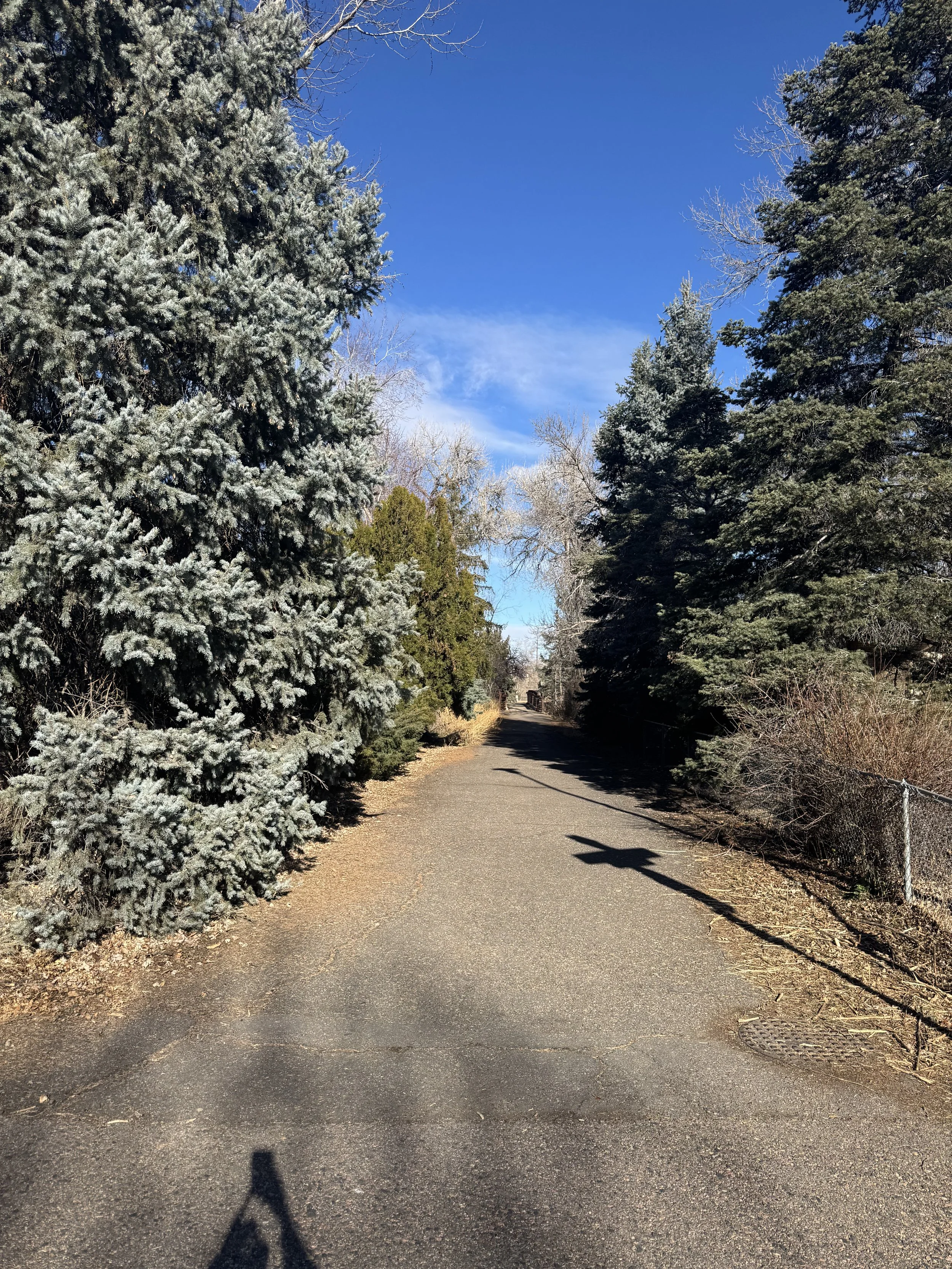
I just finished lunch and did something that's becoming one of my favorite daily rituals: a digestion walk. Not a power walk, not a cardio session—just a gentle stroll with no agenda other than to help my body process the meal I just ate and give myself permission to slow down.
There's something almost countercultural about this practice. We're so conditioned to make every walk "count" toward our step goals or fitness targets. But a digestion walk has a different purpose entirely.
What Makes It Different
A digestion walk is intentionally gentle. Your heart rate stays relatively calm, your breathing is easy, and your pace is whatever feels natural. It’s usually slower than you'd normally walk. The goal isn't to burn calories or hit a certain distance. It's to support your digestive system as it does its work.
When you move after eating, you're doing your body a genuine favor. Gentle movement stimulates your digestive tract, helping food move through your system more smoothly and potentially reducing bloating and discomfort. This can be especially helpful if you're prone to indigestion or that uncomfortable "too full" feeling.
Walking after meals has also been shown to help regulate blood sugar levels. When you move, your muscles use glucose for energy, which can help prevent the sharp spikes and crashes that leave you feeling sluggish or reaching for more food an hour later. For anyone managing their blood sugar or simply trying to avoid that post-lunch energy slump, this is significant.
There's also evidence that post-meal walks may support heart health by improving circulation and helping manage cholesterol levels over time. And because you're moving without straining, you're giving your cardiovascular system a gentle workout that doesn't interfere with digestion the way intense exercise might.
Even your posture benefits. After sitting hunched over a meal, standing upright and walking helps counteract that compression, giving your digestive organs space to do their work and preventing the kind of chronic slouching that contributes to digestive issues.
Beyond the Physical Benefits
But here's what surprised me about making this a regular practice: the mental and emotional benefits rival the physical ones. When I step outside after lunch, I'm giving myself permission to not be productive for fifteen or twenty minutes. That break from screens, from demands, from the constant mental chatter of work or responsibilities creates a reset point in my day.
During these walks I’m noticing more like the way light filters through tree branches, a neighbor's yard that I've walked past a hundred times but never really seen. I’m noticing the giant puffy clouds in the beautiful blue sky. This isn't just pleasant; it's genuinely restorative. Our brains need these moments of low-stimulation observation to process information, reduce stress, and maintain mental clarity.
There's also something to be said for the ritual itself. Having a consistent practice that signals to your body and mind "this is time to rest and digest" can improve your relationship with food and eating. You're less likely to mindlessly snack when you've created a clear endpoint to your meal. You're more likely to feel satisfied when you've given your body time to register fullness signals, which takes about 20 minutes.
And if you struggle with afternoon energy crashes or difficulty concentrating after lunch, a digestion walk can be transformative. That gentle movement and fresh air often does more to restore alertness than another cup of coffee ever could.
How to Take Your Own
There's no wrong way to take a digestion walk, but here's what works for me:
I go within 10-30 minutes after finishing a meal, when my body is actively working to digest. The walk usually lasts 15-20 minutes, though even 10 minutes makes a difference. I deliberately leave my phone in my pocket or at home. I walk at whatever pace feels comfortable. On some days that's a leisurely stroll, on other days it's slightly brisker, and that's fine. Many times it depends on how full my belly is.
The only real rule is this: don't push yourself. This isn't exercise in the traditional sense. It's support, care, and a small gift of time to yourself and your body.
A Small Practice With Big Returns
What I've come to appreciate most about this practice is how the benefits accumulate. Better digestion, more stable energy, lower stress, improved focus, a few minutes of genuine peace in a chaotic day. None of these are revolutionary on their own, but together they shift how the entire afternoon feels.
In a culture that's always optimizing, always hustling, there's something quietly radical about a walk that doesn't need to achieve anything beyond helping you digest your meal and notice the world around you. And yet, in not trying to achieve, it delivers more than you'd expect.
Baby Steps to Big Change: Building a Walking Practice That Sticks
We've all been there. It's January 1st (or Monday, or the first of the month) and we declare: "This is it. I'm going to walk every single day this year. I'm going to get in shape. I'm going to finally make movement a priority."
We mean it. We really do. We feel motivated, energized, ready.
And then... life happens. We miss a day. Then two. Then a week. And suddenly that big, ambitious goal feels like just another thing we failed at. Another resolution abandoned. Another reminder that we can't stick with anything.
But here's the truth: it's not you that failed. It's the approach.
Goals Without Systems Are Just Wishes
Having a goal is important. Wanting to walk more, move your body, prioritize your health. These are all beautiful aspirations. But without a system to support that goal, without a realistic plan for how you'll actually make it happen in your real, busy, complicated life, that goal doesn't stand a chance.
The problem isn't lack of willpower or motivation. The problem is that we set big goals without building the small, sustainable systems that make those goals achievable.
So let's talk about how to actually do this. How to start (or return to) a walking practice in a way that works. In a way that sticks.
Start Where You Are, Not Where You Think You Should Be
The first step is an honest assessment. No judgment just look at your life right now:
How much free time do you actually have?
What's your energy level like?
What are your responsibilities?
What's realistic for this season of your life?
Maybe you have young kids at home. Maybe you're working full-time and exhausted. Maybe you're dealing with health issues or chronic pain. Maybe you haven't moved your body intentionally in years and the thought of exercise feels overwhelming.
That's okay. Start there. Start with what's true, not with what you think you should be doing.
Break It Down into Manageable Chunks
Instead of: "I will walk every day for the next month"
Try: "I will walk 3 days this coming week"
See the difference? One feels massive and intimidating. The other feels doable.
Here's the secret: small, consistent actions compound over time. Walking three days this week might not sound like much, but if you keep doing it week after week, that's 150+ walks in a year. That's sustainable change.
Build the System That Makes It Work
Okay, so you've set a realistic goal: walk three times this week. Now let's build the system that makes that actually happen.
Get specific:
How long will each walk be? Start small. Even 10 minutes counts. You can always walk longer if you feel good, but 10 minutes is achievable even on the hardest days.
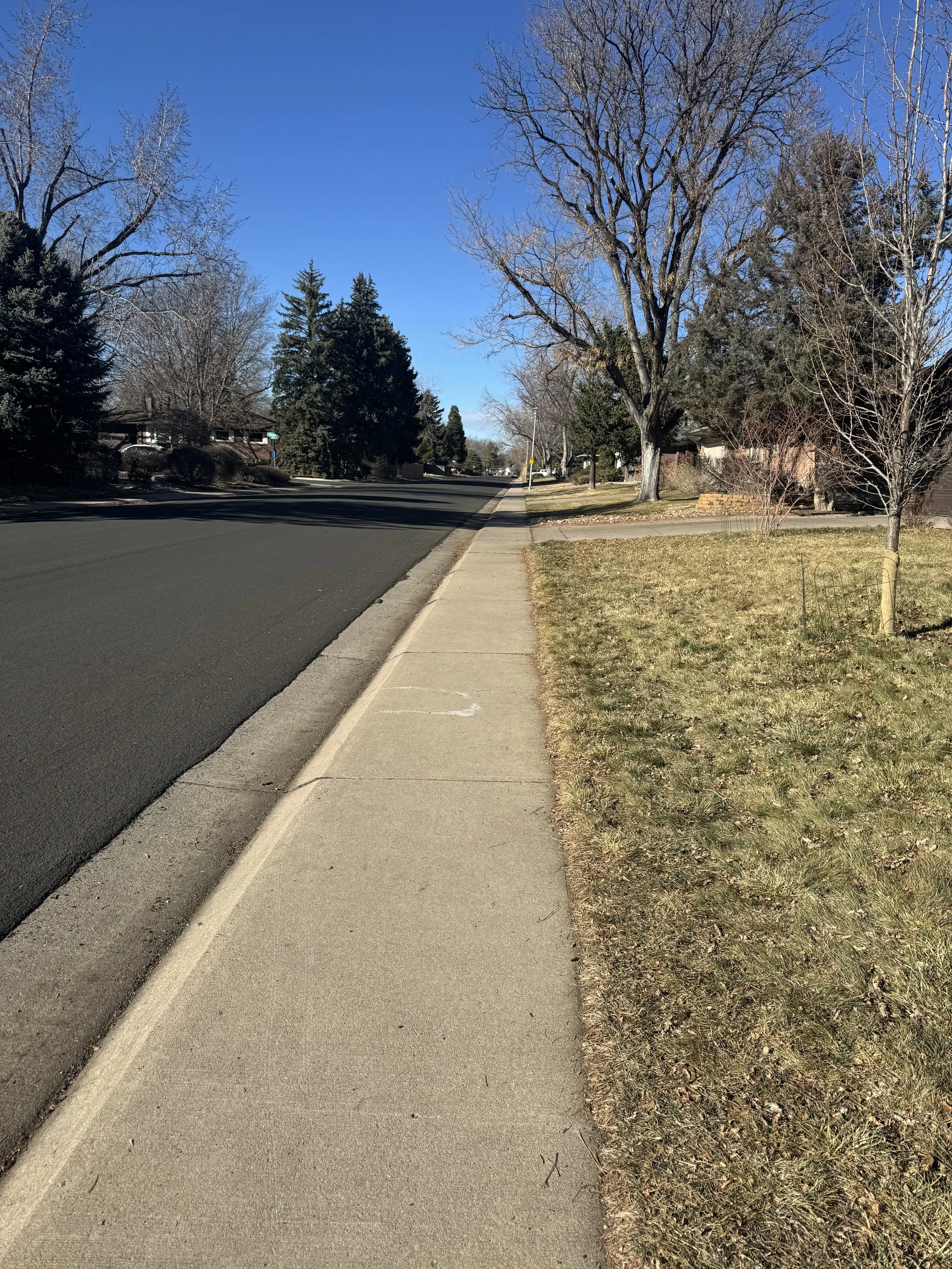
Where will you walk? Around your neighborhood? A local park? A cemetery with clear paths?
When will you walk? First thing in the morning before the day gets away from you? During lunch? After dinner? Or break it up into smaller walking moments. Pick times that work with your actual schedule.
What Do You Need to Be Successful?
Now think practically. What do you need to have in place to make this work?
The Basics:
Good walking shoes - You don't need expensive running shoes, but you do need comfortable, supportive footwear
Weather-appropriate clothing - Layers for cold weather, breathable fabrics for warmth, a rain jacket just in case
Time - Do you need to ask your partner to watch the kids? Set your alarm 15 minutes earlier? Block time on your calendar?
A way to track time - Your phone works perfectly, or a simple watch
Make It Easier on Yourself:
The easier you make it, the more likely you are to follow through. Here are some ways to set yourself up for success:
Pair Your Walk with Something You Love:
Walk with a friend and catch up while you move
Listen to your favorite podcast or audiobook
Create a "walking only" playlist of songs that energize you
Use walking time to call your mom, your sister, your best friend
Make it "thinking time" where you work through problems or let your mind wander
Remove Obstacles:
Lay out your walking clothes the night before
Keep your shoes by the door
Set a reminder on your phone
Tell someone you're doing this because accountability helps
Have a backup plan for bad weather (walk at the mall, do a YouTube walking workout at home, or simply reschedule)
Track Your Progress (But Gently):
Check off each walk on a calendar. Seeing those checkmarks adds up
Notice how you feel after walking (energized, calmer, proud?)
Track distance or time if that motivates you, but don't let numbers be the only measure of success
Celebrate your wins because three walks this week IS a big deal
Small, Thoughtful Choices Make All the Difference
Success in building a movement practice isn't about willpower or discipline. It's about thoughtful planning and realistic expectations. It's about:
Starting small enough that you can't fail
Building systems that support your goal
Removing obstacles before they trip you up
Making it enjoyable so you actually want to do it
Being flexible and kind with yourself when life gets in the way
The beautiful thing about baby steps? They still move you forward. They still count. They still change you.
Three walks this week might not sound impressive to some. But three walks a week for a month? That's 12 walks. Three walks a week for three months? That's 36 walks. That's a habit. That's a practice and lifestyle. That's real, sustainable change.
Your Turn
So here's your invitation: don't commit to walking every day for a year. Commit to walking three times this week for 10 minutes at time.
Then ask yourself:
When will I walk?
Where will I walk?
What do I need to make it happen?
How can I make it enjoyable?
What obstacles might get in my way, and how can I plan for them?
Write it down. Put it on your calendar. Gather what you need. And then just start.
Because here's what I know: you don't need a perfect plan. You need a realistic one. You need to start small, build your system, and trust that baby steps will carry you farther than you think.
One walk at a time. One week at a time. That's how it's done.
Now lace up those shoes. Your walk is waiting.
Walking Among the Dead: Finding Peace in Fairmount Cemetery
Let's just say it out loud: walking in a cemetery can feel a little weird at first.
Maybe even creepy. There's something about all those headstones, the stillness, the awareness that you're walking among people who lived entire lives—loved, struggled, celebrated, mourned. It can bring up emotions that aren't always easy or comfortable. Grief, mortality, the weight of what it means to be human.
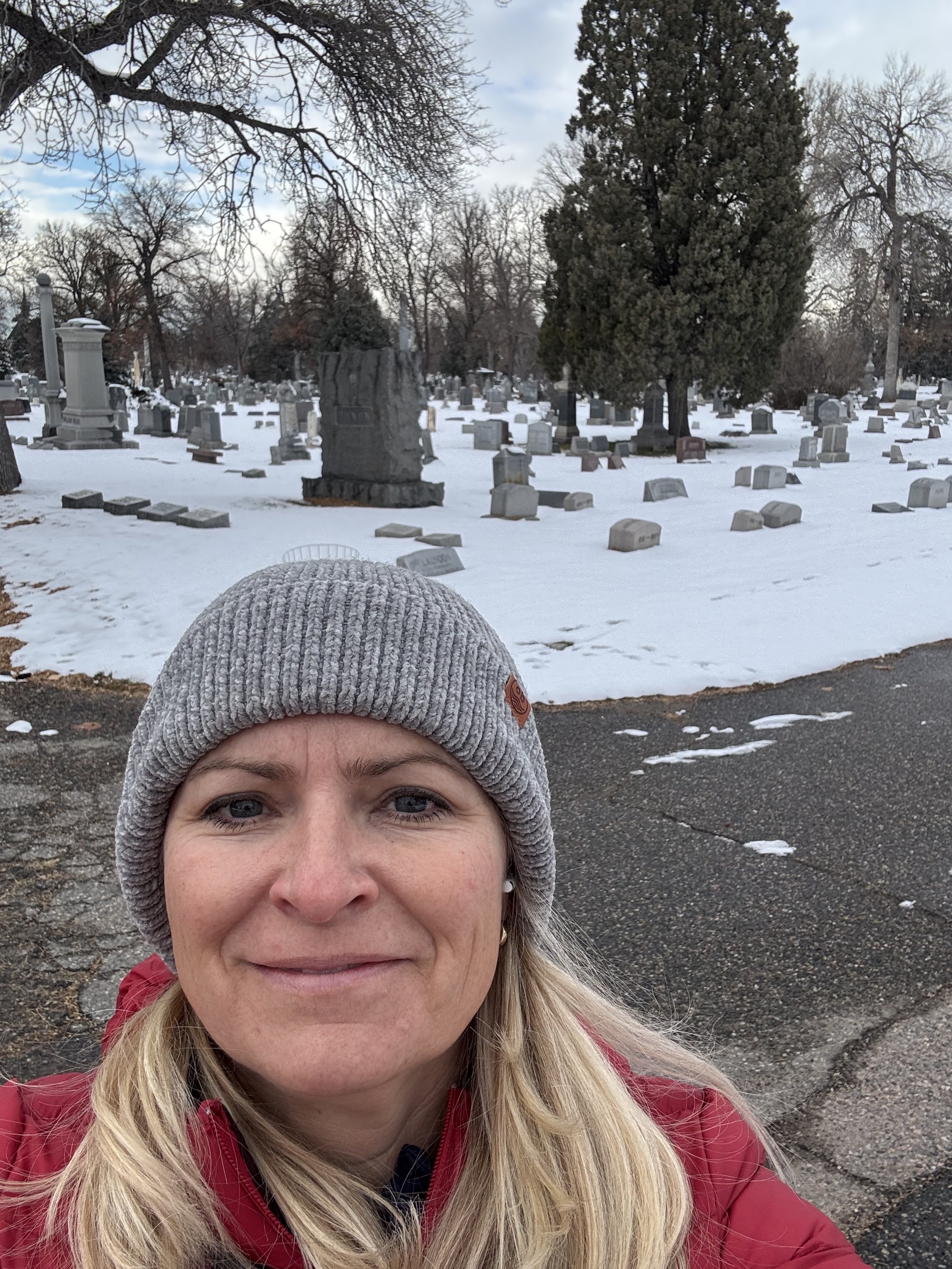
But here's what I discovered on my recent walk through Fairmount Cemetery in Denver: it can also be one of the most beautiful, peaceful, reflective places to walk in the entire city.
A Different Kind of Walk
I showed up on a winter afternoon. It was overcast, calm and the kind of soft gray day that feels like the world is wrapped in quiet. The paths were clear, the roads mostly free from snow and ice.. I put in my headphones, cued up a calming playlist, and started moving.
And almost immediately I felt peaceful.
There's no traffic to dodge. No cyclists flying past. No need to stay hyper-alert or share the path. Just you, the trees, the headstones, the sky. It's a place that gives you permission to slow down and to just be. A wonderful place to think, to reflect, and to let go. A place to work through whatever you came there carrying.
Curiosity and History
But here's the thing—walking in a cemetery isn't just about quiet reflection. It's also fascinating. Fairmount is like walking through Colorado's history book. As you wander, you can get curious:
Who were these people?
What did they do?
How did they live their lives?
What kind of trees are these?
Fairmount Cemetery is Colorado's largest arboretum, home to hundreds of varieties of trees and roses spread across more than 800 acres. Established in 1890, it's a living museum of both people and plants. You'll find governors buried here, U.S. senators,and war heroes. You’ll also find local educational pioneer Emily Griffith, philanthropist Helen Bonfils, the Boettcher family, the Brown family and so many others who shaped this state.
You can find a full list of Fairmount's famous inhabitants online if you want to explore further and maybe plan your walk around specific gravesites.

Why Walk in a Cemetery?
If you're looking to escape the hustle and bustle of everyday life, a cemetery offers something unique. It's quiet without being isolating and reflective without being heavy. It's a place with minimal distractions, so whether you're walking for exercise, working through a problem, or simply letting go of stress, you can focus entirely on your walk.
And in winter? When snow and ice make sidewalks treacherous and trails impassable, cemeteries are often your best bet for a clear, safe path.
Yes, it might feel strange at first. Yes, it might bring up big feelings. But that's okay. Sometimes we need places that invite us to sit with those feelings, to honor them, to walk through them, literally.
An Invitation
So if you're feeling curious, if you need quiet, if you're looking for a winter walk that's both calming and interesting, I encourage you to try Fairmount or any cemetery. Bring your playlist or walk in silence. Stop to read the headstones or just keep moving. Learn about Colorado history or simply notice the trees.
Walk among the dead and remember what it means to be alive.
For more information on Fairmount check out their website here.

Have you ever walked in a cemetery? What was your experience like? I'd love to hear about it.
A Fast Paced Walk That Works
Let me ask you something: have you heard about interval walking yet?
If you've been scrolling through social media lately, you've probably seen it popping up everywhere. It's also called Japanese walking, because it was developed by researchers in Japan who were looking for an efficient, low-impact way to build cardiovascular health, strengthen muscles and bones, and boost overall mood. The concept is simple but powerful: a 5-minute warm-up, then alternating 3-minute intervals of fast-paced, intense walking with 3 minutes of slower, calmer walking for at least 30 minutes total, followed by a 5-minute cool-down.
It's accessible, it's effective, and it doesn't require anything more than a good pair of shoes and a way to track your time. Here's a great article that breaks down the technique if you want to learn more.
As a former runner turned walker, I was intrigued. I love walking for its mindfulness, its gentle rhythm, its invitation to notice and explore. But sometimesI need something different. Sometimes I have pent-up energy that needs releasing, stress that needs sweating out, a workout that gets my heart pounding and my blood moving. Interval walking promised all of that without the impact on my joints that running demands.
So I decided to try it.
Lacing Up with Intention
I laced up my shoes, cued up a killer workout playlist on my phone, popped in my headphones, and headed out the door. My watch was ready to track my time and monitor my intervals. This walk wasn't about soaking in the beauty of my neighborhood or discovering hidden corners of my local park. This walk had one mission: get in a good, heart-pounding workout and release that wild energy buzzing under my skin.
I started with the 5-minute warm-up, easing into it, letting my body wake up and my pace gradually increased. By the time minute six rolled around, I was ready. I queued up a fast-paced song and took off.
The Rhythm of Fast and Slow
Walking quickly along my well-worn path, I could feel my heart rate climb during that first 3-minute interval. My breath quickened. My arms pumped back and forth with intention. I was working hard, and it felt good. Then came the slow-down—3 minutes at a nice, steady, calm pace. I'll be honest: slowing down isn't always easy for me. But those recovery intervals were exactly what I needed to reset, catch my breath, and prepare for the next round.
I kept up this rhythm for over 45 minutes. There were a few times I went long on the fast portions, mostly because I was so into my music that I lost track of time. But those slower intervals were essential. They gave my body and heart the chance to recover, to catch up, to be ready to push again.
By the end, I was sweaty, energized, and satisfied. This is a workout that delivers.
The Pros
Interval walking is efficient—you get a solid cardiovascular workout in a relatively short amount of time. It's fun, it's energy-releasing, and somehow also energy-boosting. You'll sweat. You'll feel accomplished. And you'll give your heart and muscles exactly what they need.
Things to Consider
Here's what I learned: know your route. Use a trail or path that's familiar, one you could walk with your eyes closed. You don't want to be thinking about where you're going or navigating new terrain. A track or even a treadmill works great for this. You'll be checking your watch a lot, so be prepared to keep somewhat accurate time. This isn't a leisurely stroll where you lose yourself in thought. You need to stay focused.
A good watch or timekeeping tool is essential. And a great workout playlist is non-negotiable. This isn't the walk for a meandering podcast or audiobook. You need music that keeps you motivated and engaged, songs that make you want to move.
Your Turn
If you're looking for a walking workout that's quick, efficient, and genuinely challenging, interval walking might be exactly what you need. It won't replace those slow, mindful walks where you notice the light filtering through the trees—but it doesn't have to. It's a different tool for a different need.
So lace up. Queue up your playlist. Set your timer. And see what your body can do when you give it permission to push and recover, push and recover, all the way home.
Let me know if you try it—I'd love to hear how it goes.
Experiencing My Neighborhood Park for the First Time (Again)
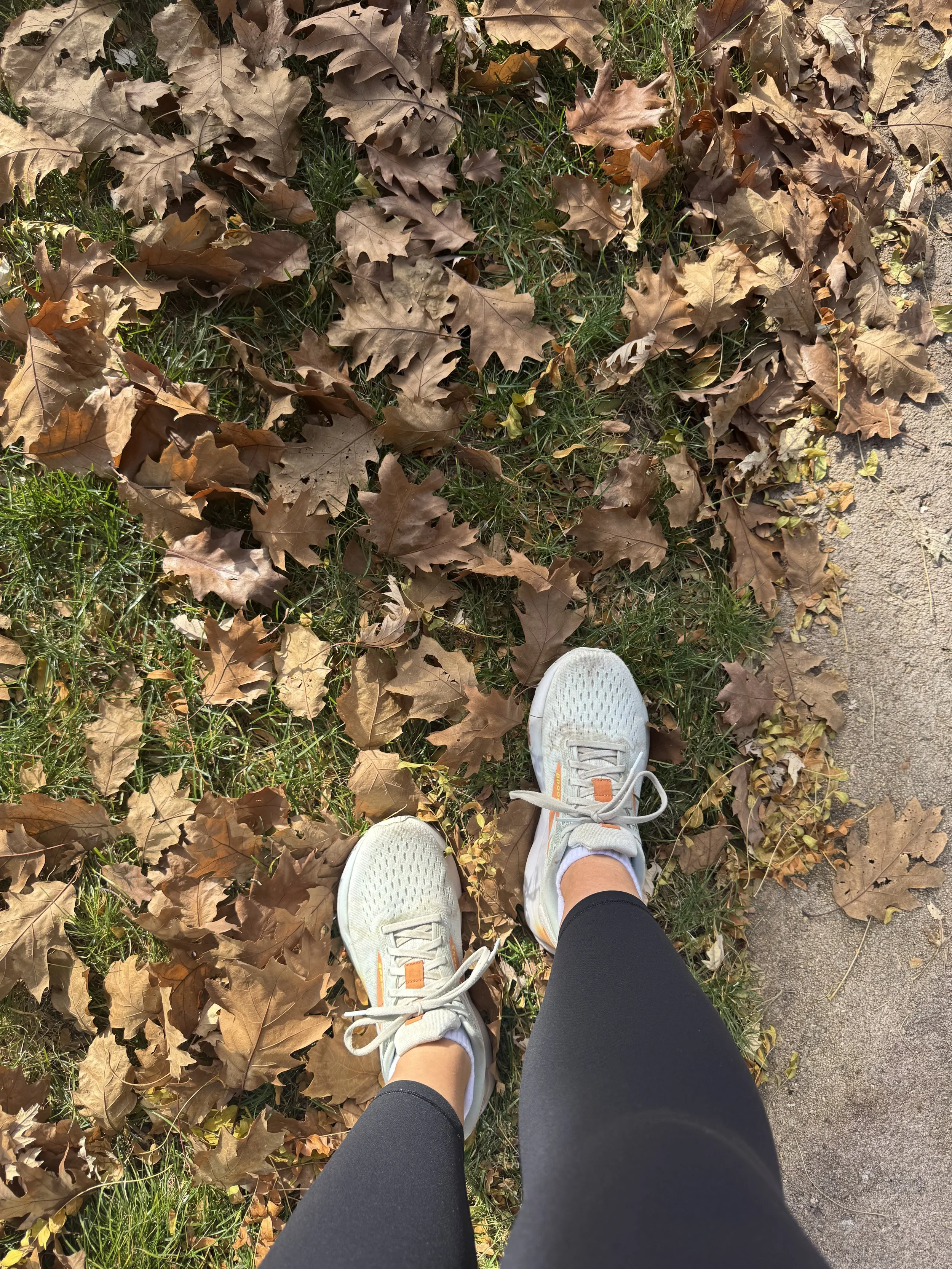
I’m ready to go!
Sometimes the most profound discoveries happen in our own backyards.
This morning, I laced up my shoes with a simple intention: to walk through Bible Park. It’s the place I've walked dozens, maybe hundreds of times. But today’s mission was different, I really wanted to open my mind and heart to a new way of viewing the park and a new way of enjoying my walk. I wanted to experience Bible Park not as background scenery on my way to somewhere else, not as a route to clock steps or raise my heart rate, but as a place worth exploring with fresh eyes and all my senses wide open.
I chose trails I don't normally take, the ones that veer slightly off my usual loop. I wasn't chasing a workout. I was chasing beauty, presence, whatever the park wanted to show me if I slowed down enough to notice.
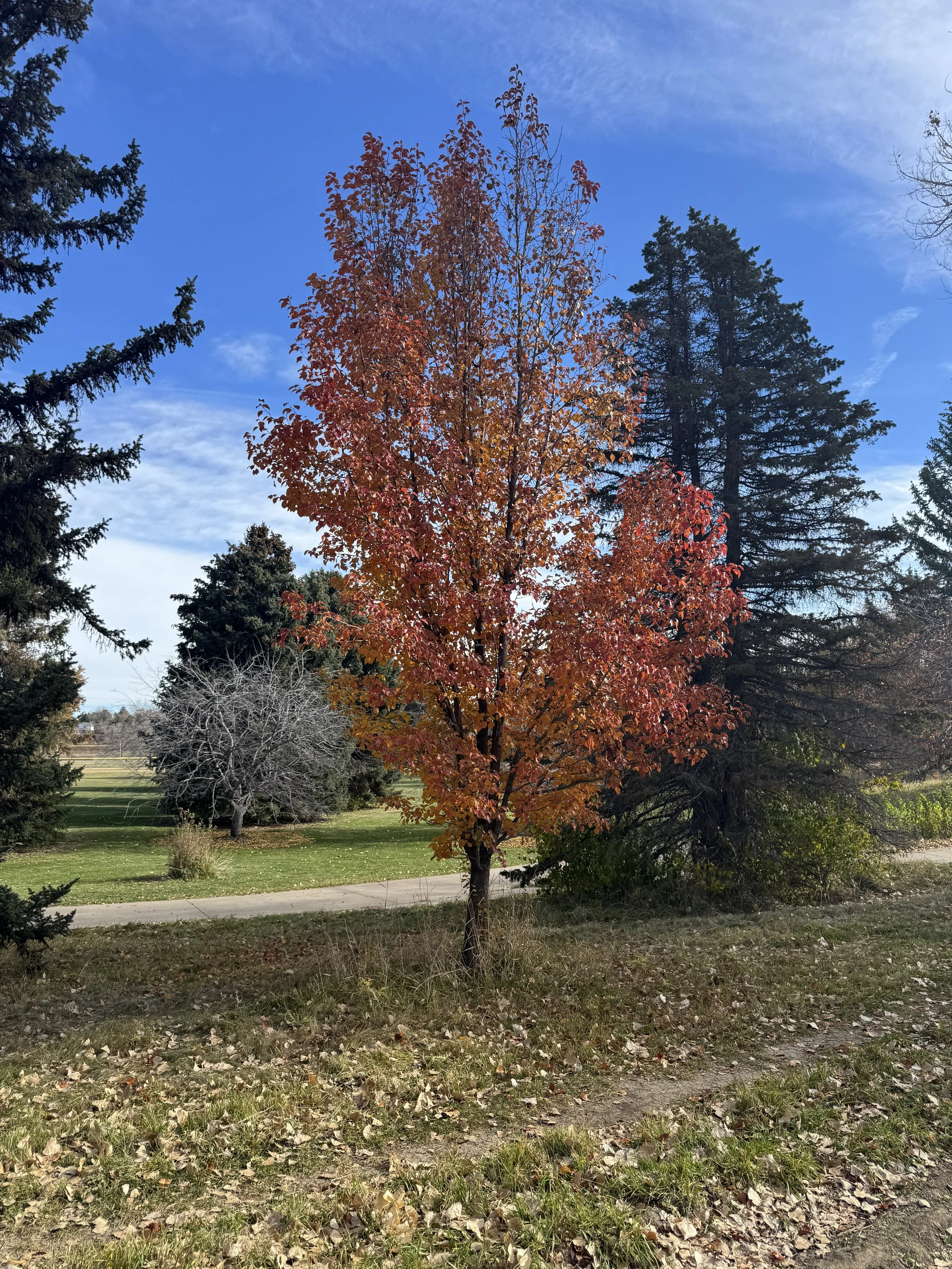
The trees showing off their autumn splendor.
The clear sky stretched overhead in that particular shade of blue that only Colorado can give us. The trees were lit from within, or at least that's how it looked. Shades of yellow and gold and orange layered together. Leaves rustling and shaking in a light breeze that moved through the park like calming waves. The whole place seemed to shimmer with light and energy, bursting with a kind of quiet joy.
I walked at a moderate pace, letting each of my senses have its own turn. The air was warm and the sun felt hot against my skin, despite it being mid-November. The cool breeze brought relief. I could hear birds calling to each other, as if they were playing games. There were dogs barking in the distance, and there was a steady hum of cars passing by on nearby streets. It was the perfect soundtrack of a neighborhood alive and moving freely.
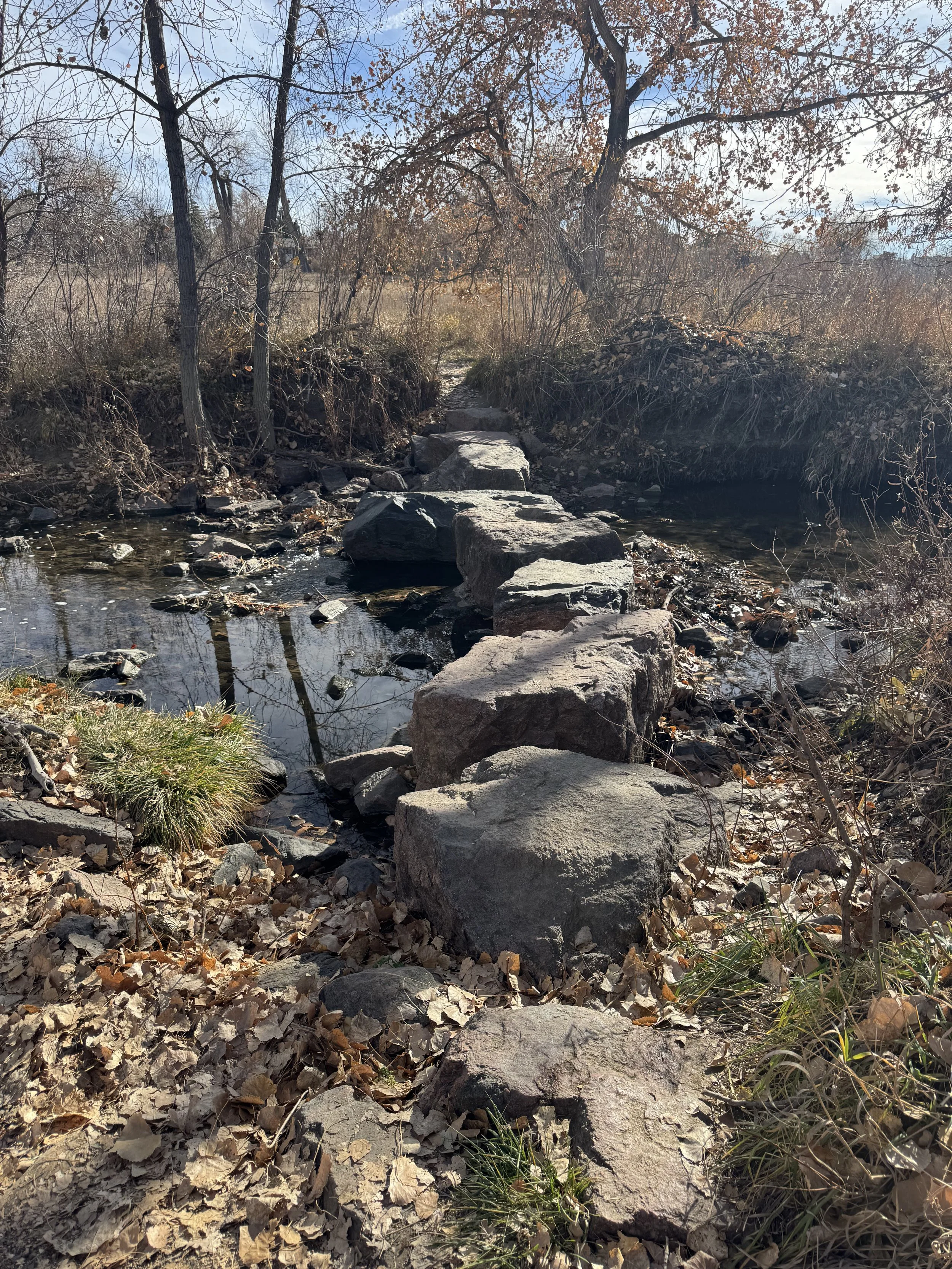
Taking time to cross the creek.
I stopped at the creek, which I normally don’t do, and I just stood there and watched the water meander by. It seemed to be unhurried, taking its time, and slowly making its way down stream. The sound of it was soothing, a gentle whisper beneath all the other sounds. It was calling to me and reminding me to slow down, take a breath, enjoy the unhurried journey.
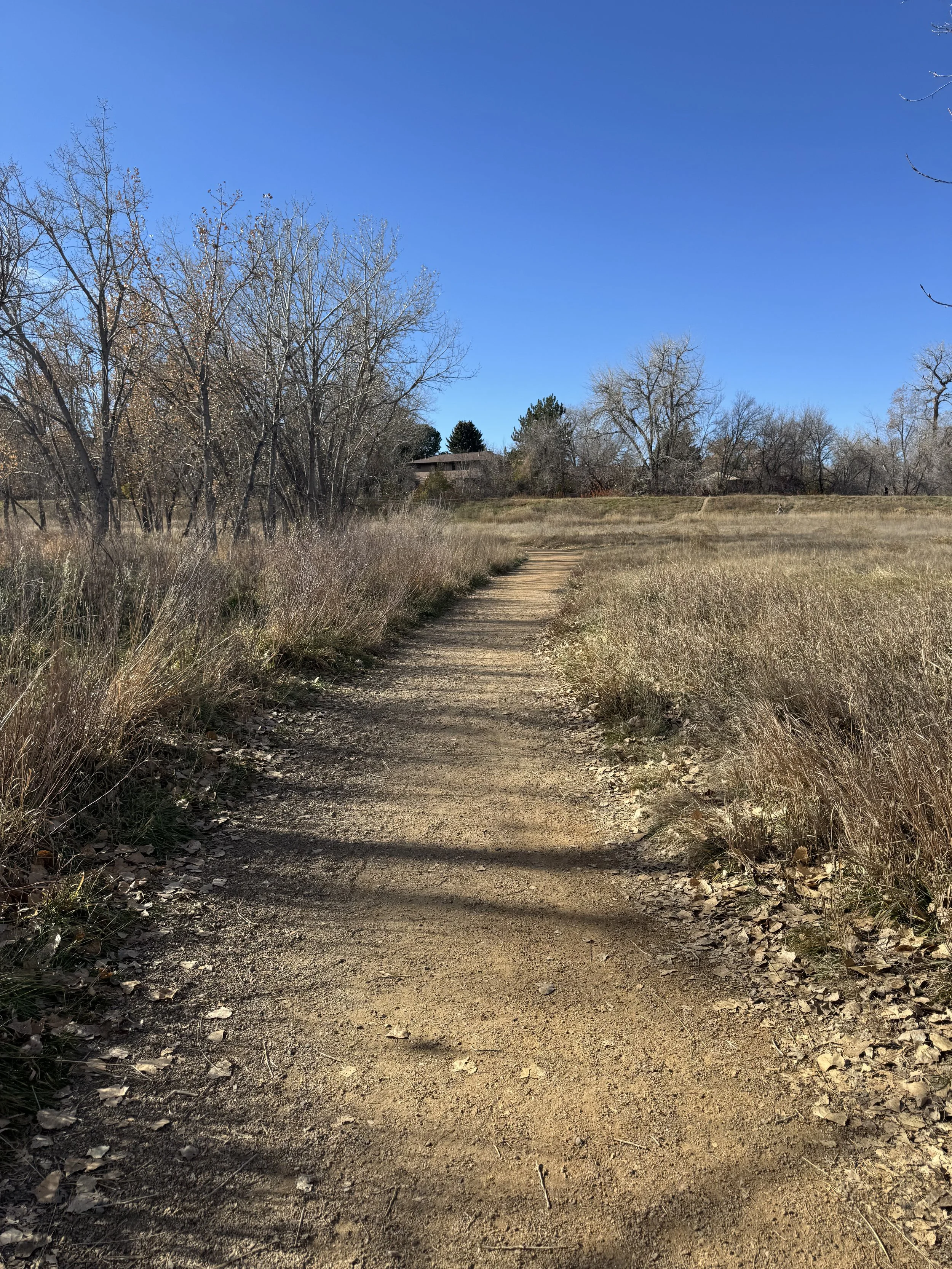
A path less traveled
I then took the path less traveled. It’s a dirt path that I usually walk right by because it’s not on my normal route. The path skirts the water and flows through some tall grasses. It was bustling with activity from Rolly Pollys slowly making their way to the next dirt pile, to squirrels scampering up and down the Cotton Wood trees by the banks of the creek. I took in all the new sights and sounds and noticed that sometimes all it takes is a small deviation to shift my perspective entirely. It was like I was seeing the park for the first time.
This is what I mean when I say walking is more than exercise. This walk was a full-body and full-heart experience. A reminder that beauty isn't something we have to chase down in distant places. Sometimes it's waiting right here, in the park we thought we already knew, asking only that we show up, slow down and pay attention.
Your turn: What familiar place could you explore with fresh eyes? Where might you find beauty hiding in plain sight?
Location: Bible Park 6600 E. Yale Ave. Denver, CO
Walking for Wellness
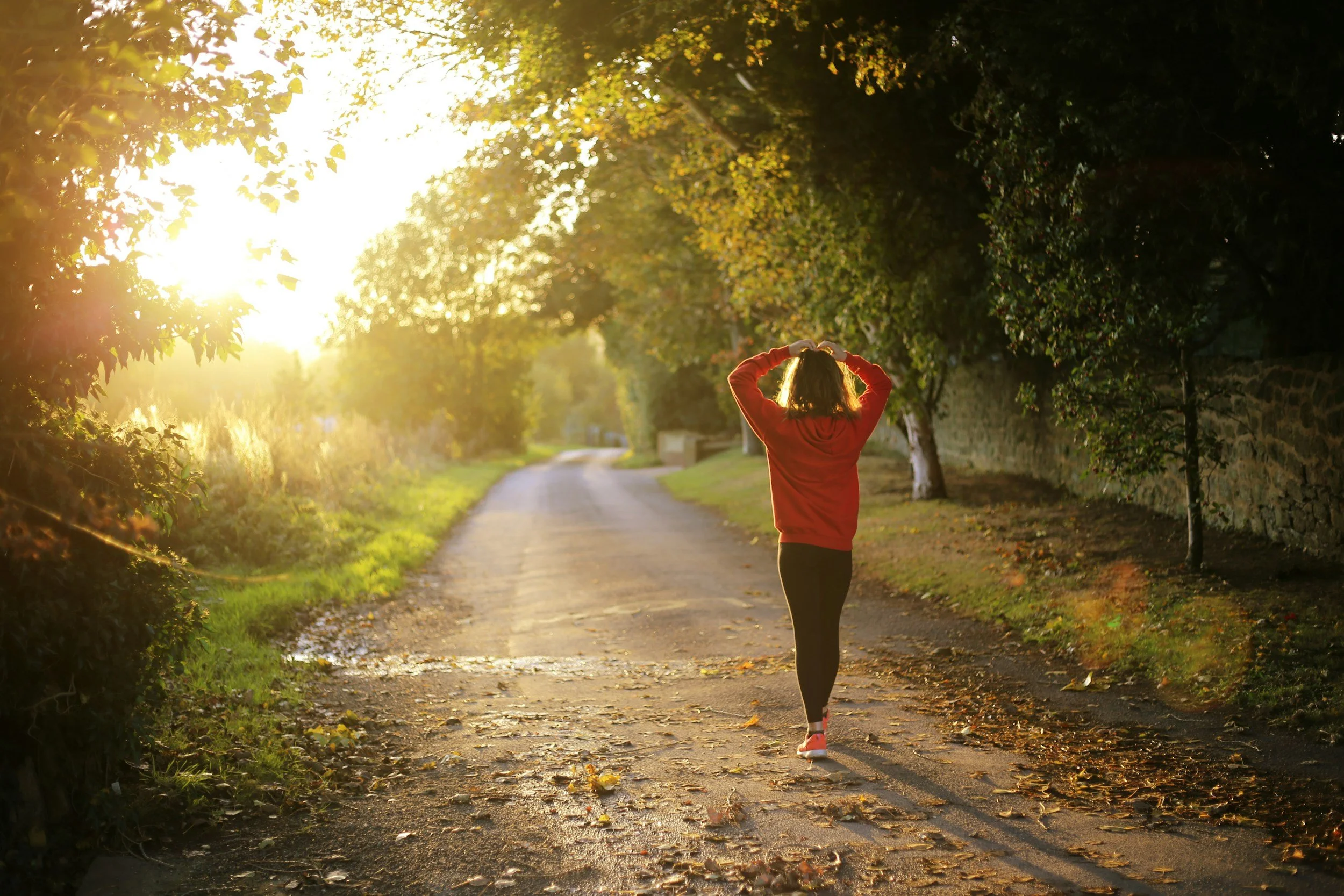
Welcome to the Journey
There's something quietly radical about putting one foot in front of the other. Walking is perhaps the most democratic form of movement we have—it requires no equipment, no membership, no special skills. Just you, your body, and the ground beneath your feet.
This blog exists because walking is so much more than exercise, though it's certainly that too. It's a tool for exploration, both outward and inward. When we walk, we open ourselves to the world around us: the way afternoon light catches on a storefront window, the sound of leaves underfoot, the unexpected garden tucked behind a familiar street. We become observers again, noticing details that our hurried, driving, scrolling lives usually blur past.
But walking also turns us inward. It clears the mental clutter while somehow organizing our thoughts. Ideas surface on walks that never appeared at desks. Problems untangle themselves. The rhythm of our steps creates space for our minds to wander and wonder. It's a moving meditation, a check-in with both body and mind—how are my shoulders? Where is my breath? What am I carrying today?
Walking can be solitary or social, contemplative or conversational. It can be how we work through what troubles us or how we connect with the people we love. It's exercise and therapy and adventure, often all at once.
Here, I'll share the walks that have shaped me, the hidden corners and beloved paths of Denver and the surrounding areas. But this is more than a guide to special spots—it's an invitation to pay attention, to feel, to turn inward even as we move outward. This is a space for wellness that doesn't require perfection, for courage that starts with a single step, for the simple, profound act of moving through the world with awareness.
So lace up your shoes, or don't. Start where you are. Let's walk together.